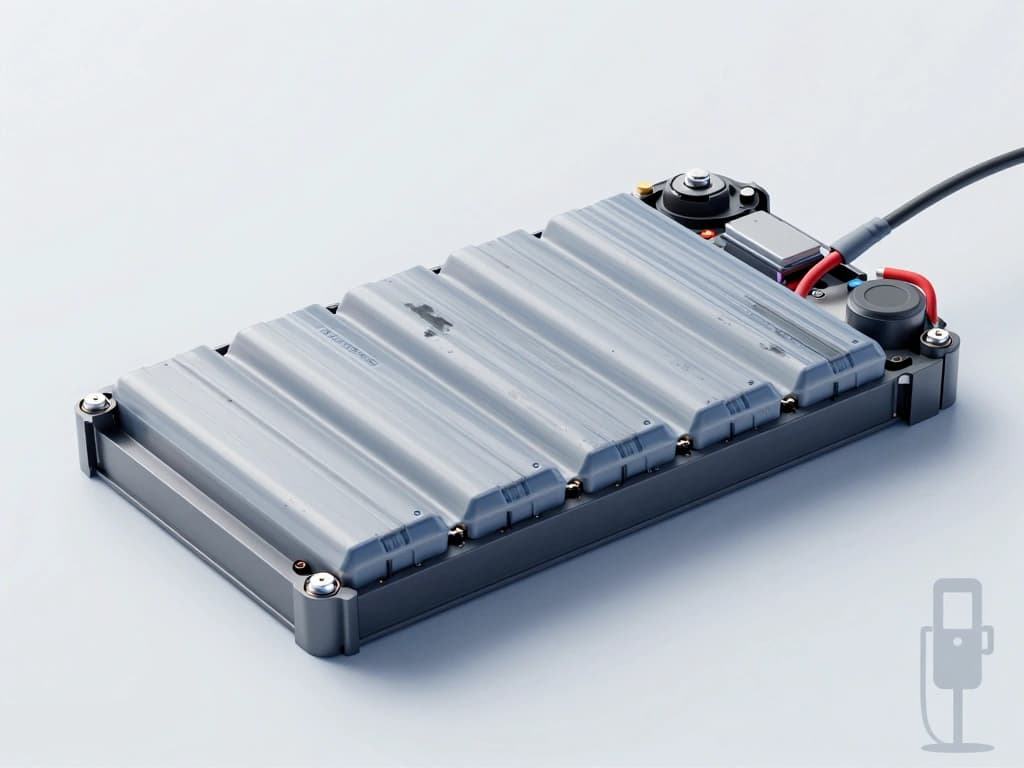
Explore how EV battery degradation progresses over time. Understand the factors affecting performance and lifespan to optimize your electric vehicle experience.
The Science Behind EV Battery Chemistry
Understanding Lithium-Ion Batteries
Lithium-ion (Li-ion) batteries are the backbone of most electric vehicles (EVs) due to their high energy density, long cycle life, and relatively low self-discharge rates. These batteries consist of an anode, usually made from graphite, a cathode composed of lithium metal oxides, and an electrolyte solution that facilitates ion movement. During charging, lithium ions move from the anode to the cathode, and during discharging, they travel back. This movement is essential for the battery's function, but it also lays the groundwork for understanding battery degradation.
Role of Electrolytes in Battery Performance
The electrolyte in a lithium-ion battery plays a crucial role in its performance and longevity. It is a medium that allows lithium ions to pass between the anode and cathode. The choice of electrolyte can significantly affect battery efficiency, safety, and degradation rates. For instance, traditional liquid electrolytes can lead to the formation of a solid electrolyte interphase (SEI) layer that, while necessary for battery operation, can also contribute to capacity loss over time. Newer solid-state electrolytes are being explored as alternatives that may reduce degradation and enhance battery life.
Chemical Reactions and Their Impact on Degradation
As EV batteries operate, various chemical reactions occur that can lead to degradation. One such reaction is the formation of lithium plating, which can happen during rapid charging or in cold temperatures. This process not only reduces the battery's capacity but can also increase the risk of short circuits. Additionally, side reactions can consume lithium and lead to the growth of the SEI layer, further diminishing the battery's efficiency. Understanding these reactions is critical for improving battery technology and longevity.
Factors Affecting Battery Lifespan
Temperature Influence on Battery Health
Temperature is one of the most significant factors affecting battery lifespan. High temperatures can accelerate chemical reactions within the battery, leading to faster degradation. For example, exposure to temperatures above 30°C (86°F) can increase the rate of capacity loss significantly. Conversely, extremely low temperatures can lead to increased internal resistance and lithium plating, both of which are detrimental to battery health. Maintaining an optimal temperature range (typically between 20°C and 25°C or 68°F and 77°F) is essential for prolonging battery life.
Effects of Charging Practices on Degradation
Charging practices play a pivotal role in battery health. Frequent use of fast chargers may lead to quicker degradation due to the high currents involved, which can induce lithium plating. A study by the American Chemical Society found that charging at a high rate could reduce the lifespan of a battery by as much as 20% compared to standard charging methods. Ideally, charging should be done slowly, especially when the battery is nearing full capacity, to minimize stress on the battery components.
Impact of Driving Habits on Battery Longevity
Driving habits also contribute to the rate of battery degradation. Aggressive acceleration and frequent high-speed driving can lead to higher energy consumption, which in turn requires more frequent charging. This can create a cycle of rapid charge-discharge cycles that accelerate capacity loss. For instance, studies suggest that drivers who frequently engage in rapid acceleration can see a significant reduction in battery life, with reported capacity losses of up to 30% over three years compared to drivers with more moderate driving styles.
Stages of Battery Degradation
Initial Capacity Loss and Its Causes
Initially, after a battery is manufactured and put into use, it may experience a rapid capacity loss, often referred to as the "initial capacity fade." This stage typically occurs within the first few hundred charge cycles and can lead to a 5-10% reduction in capacity. This phenomenon is largely due to the formation of the SEI layer and other early-stage chemical reactions that consume active lithium. For example, a Tesla Model 3 may experience a capacity drop from 100% to around 90% within the first 100 charging cycles, primarily due to these initial degradation processes.
Mid-Life Performance Decline
As the battery enters its mid-life stage, performance decline becomes more pronounced. This stage is characterized by a gradual decrease in capacity and an increase in internal resistance, which can affect the vehicle's performance. Data from EV manufacturers indicate that after approximately 1,000 charge cycles, many batteries lose about 20-30% of their original capacity. Factors contributing to this decline include cumulative thermal stress and repeated charge-discharge cycles, which exacerbate degradation mechanisms.

End-of-Life Characteristics and Indicators
Eventually, every lithium-ion battery will reach an end-of-life stage, typically defined as when the battery capacity drops to around 70-80% of its original rating. Indicators of this stage include reduced driving range, longer charging times, and noticeable performance issues, such as sluggish acceleration. For example, an EV with a battery capacity that has declined to 70% may only be able to travel 150 miles on a full charge instead of its original 200 miles, significantly impacting user experience.
Measuring Battery Degradation
State of Health (SoH) Assessments
To understand the extent of battery degradation, the State of Health (SoH) is a critical metric. The SoH is expressed as a percentage of the battery's current capacity relative to its original capacity. For instance, if a battery originally had a capacity of 60 kWh and now holds 45 kWh, its SoH would be 75%. Regular SoH assessments can help users gauge battery performance and make informed decisions about maintenance or replacement.
Cycle Count vs. Calendar Age
Two primary factors influence battery degradation: cycle count and calendar age. The cycle count refers to the number of complete charge-discharge cycles the battery has undergone, while calendar age refers to the time elapsed since the battery was manufactured. Interestingly, these two factors can lead to different degradation profiles. For example, a battery that has undergone 500 cycles may still be in good health if it is less than two years old, while another battery of the same cycle count but five years old may show significant degradation due to calendar aging effects.
Tools and Technologies for Monitoring Battery Health
Several tools and technologies are available for monitoring battery health, including onboard diagnostics and mobile applications specifically designed for EVs. For instance, Tesla vehicles come equipped with built-in monitoring systems that provide real-time data on battery health, including SoH and temperature metrics. Third-party apps like "BatteryLog" and "Leaf Spy" offer additional insights for Nissan Leaf owners, allowing them to track their battery's performance over time and make informed decisions about their vehicle's usage.
Mitigation Strategies for Slowing Degradation
Optimal Charging Techniques
Adopting optimal charging techniques can significantly slow battery degradation. Most experts recommend charging at a lower current whenever possible and avoiding charging to 100% unless necessary. For those using Tesla vehicles, enabling the "Daily" charging setting, which typically charges to about 80%, can prolong battery life. Additionally, using a Level 2 charger instead of a DC fast charger can reduce stress on the battery during charging.
Temperature Management Solutions
Implementing effective temperature management solutions is crucial for maintaining battery health. Many modern EVs come with thermal management systems designed to keep the battery within an optimal temperature range. For instance, the Chevrolet Bolt EV features an active liquid cooling system that helps regulate battery temperature during both charging and driving. Additionally, parking in shaded areas or garages during extreme weather can help mitigate temperature fluctuations and prolong battery life.
Future Technologies in Battery Longevity
Looking ahead, researchers are exploring various technologies aimed at improving battery longevity. Innovations such as solid-state batteries and lithium-sulfur batteries show promise in reducing degradation rates significantly. Solid-state batteries, for example, replace the liquid electrolyte with a solid one, potentially eliminating the formation of harmful SEI layers and enhancing overall battery performance. Companies like QuantumScape are making strides in this area, aiming for commercialization within the coming years.